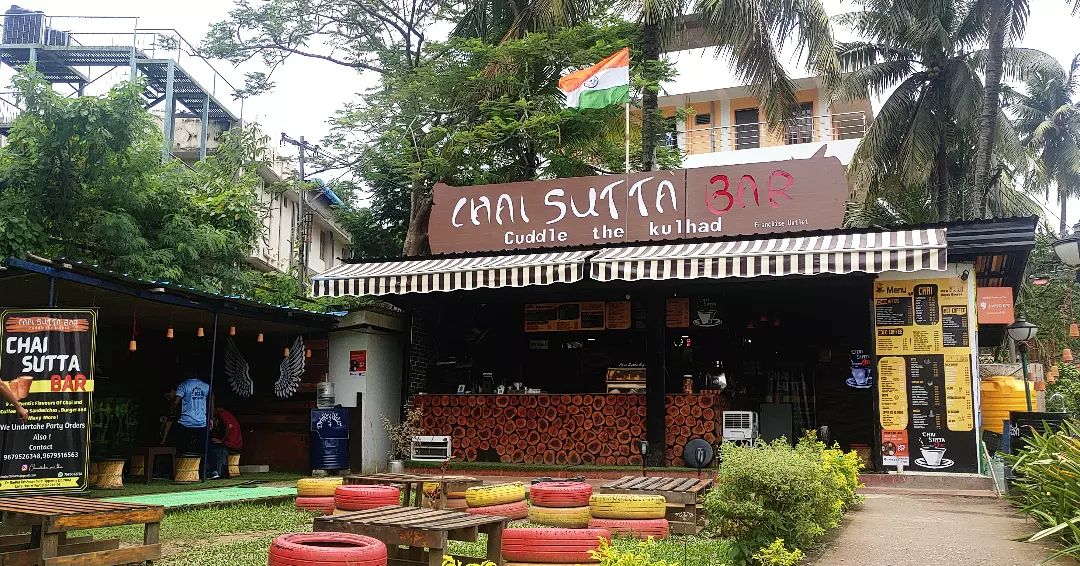
Every Chai Sutta Bar article quotes the same figures: 108% ROI, 40–50% profit margins, break-even in 12–18 months. What none of them explain is that the 40–50% figure refers to gross margin on individual cups of chai, not your take-home profit after rent, royalty, staff, raw materials, and electricity. Once you run those numbers honestly, the picture is more nuanced — and more useful for making a real decision.
This article gives you the complete picture: the brand’s genuine strengths (they are real), the actual profit math, the risks that matter in 2026, and an honest verdict on who this franchise is right for.
Already decided to apply? Skip to our Chai Sutta Bar franchise listing → for the full cost breakdown, outlet formats, and application steps.
What Is Chai Sutta Bar — in Plain Terms
Chai Sutta Bar (CSB) was founded in 2016 by Anubhav Dubey and Anand Nayak in Indore, Madhya Pradesh — two competitive exam dropouts who started their first outlet next to a girls’ hostel with hand-painted signage on a scrap piece of wood because they couldn’t afford a printed banner. They built it into a ₹150 crore brand with 600+ outlets across 320+ cities and international presence in Dubai and Oman — entirely without outside capital.
The concept is deliberately simple: affordable kulhad chai (starting at ₹10 a cup) in a vibrant, youth-oriented setting. The kulhad is not just a serving vessel — it is the brand’s USP, sourced from approximately 500 potter families at 3 lakh units per day, carrying a strong sustainability and cultural identity narrative that resonates deeply with the brand’s college-aged core customer.
Despite the name, CSB has a strict no-smoking policy inside outlets. The “sutta” in the name is a cheeky cultural reference to the college break culture — the idea that chai has replaced the cigarette break for the health-conscious generation.
Chai Sutta Bar Franchise Rating — Our Verdict at a Glance
Parameter | Rating | Why |
|---|---|---|
Brand strength | ⭐⭐⭐⭐ 4/5 | Extremely strong youth brand identity — one of the most recognisable tea cafe chains in India |
Investment requirement | ⭐⭐⭐⭐ 4/5 | ₹16–25 lakhs is reasonable for an F&B franchise with this level of brand recognition |
Profit potential | ⭐⭐⭐ 3/5 | Good in the right location — but royalty + marketing fee + raw material costs eat into headline margins |
Location dependence | ⭐⭐ 2/5 (risk) | CSB’s customer base is almost entirely youth-centric — a bad location demographic kills the business |
Franchisor support | ⭐⭐⭐⭐ 4/5 | End-to-end support from setup to raw material supply to marketing — above average for this category |
Competition risk | ⭐⭐⭐ 3/5 | Market saturating fast in Tier-1 cities; Chaayos, Chai Point, and local brands compete hard |
Overall verdict | ⭐⭐⭐⭐ 4/5 | A genuinely strong youth-market franchise — but only works with the right location and customer profile |
The Profit Reality — What Do Franchisees Actually Earn?
The 40–50% gross margin figure that CSB promotes refers to the margin on the beverage itself — the difference between raw material cost and selling price of a cup of chai. That is a real and genuinely good product-level margin. The confusion arises when investors read that as their take-home profit, which it is not.
Here is the actual monthly P&L for a standard CSB outlet once all costs are factored in:
Standard Chai Sutta Bar Outlet — Realistic Monthly P&L
Item | Conservative Location | Good Location |
|---|---|---|
Monthly gross sales | ₹3–4 lakhs | ₹6–8 lakhs |
Raw material cost (~40–45% of sales) | ₹1.35–1.8 lakhs | ₹2.7–3.6 lakhs |
Gross profit | ₹1.65–2.2 lakhs | ₹3.3–4.4 lakhs |
Rent | ₹15,000–₹25,000 | ₹30,000–₹60,000 |
Royalty fee (4% of net sales) | ₹12,000–₹16,000 | ₹24,000–₹32,000 |
Marketing fee (2% of net sales) | ₹6,000–₹8,000 | ₹12,000–₹16,000 |
Staff salaries (2–4 people) | ₹18,000–₹30,000 | ₹30,000–₹50,000 |
Electricity and utilities | ₹6,000–₹10,000 | ₹10,000–₹15,000 |
Packaging (kulhads, cups, bags) | ₹8,000–₹12,000 | ₹15,000–₹20,000 |
Misc (maintenance, local marketing) | ₹3,000–₹5,000 | ₹5,000–₹8,000 |
Net monthly profit | ₹17,000–₹54,000 | ₹1,09,000–₹1,99,000 |
Net profit margin (approximate) | ~12–18% | ~18–25% |
The honest takeaway: A well-located CSB outlet turning over ₹6–8 lakhs/month can genuinely earn ₹1–2 lakhs net monthly profit — that is a real and attractive return. A poorly located outlet at ₹3–4 lakhs turnover earns ₹17,000–₹54,000 per month — barely above minimum wage after accounting for owner effort. The brand cannot save a bad location. CSB’s daily revenue reportedly ranges from ₹1,500 to ₹2,500 for an average outlet — meaning a 30-day month generates ₹45,000–₹75,000 gross sales on average, which places most outlets toward the conservative end of the table above.
The Hidden Costs Nobody Talks About
1. Royalty + Marketing Fee — An Ongoing 6–7% Off the Top
CSB charges a royalty fee of 4% of net sales plus a marketing contribution of 2–3% of gross monthly revenue. On a ₹5 lakh/month outlet, this is ₹20,000–₹25,000 going back to the franchisor every single month — before you pay a rupee of rent or staff salary. Over a 5-year franchise agreement, this compounds to ₹12–15 lakhs in ongoing fees. This is not a criticism — royalty-based models are standard in quality franchises — but it must be factored into your projections from day one, not discovered after signing.
2. Kulhad Packaging Costs
The kulhad is CSB’s biggest brand differentiator — and it is also an ongoing cost. At 3 lakh kulhads per day across the network, the per-unit cost is managed at scale centrally, but individual franchisees bear the packaging cost per cup. At high volume, this adds up. A busy outlet serving 300 cups per day uses 300 kulhads — small per-unit cost, large monthly aggregate.
3. Raw Material Procurement — Tied Supply Chain
CSB franchisees must source core raw materials (tea, milk, certain branded inputs) through CSB’s designated supply chain — not from local vendors. This ensures consistency but removes the franchisee’s ability to negotiate better prices locally. In periods of dairy price inflation, your raw material cost rises with the market but your menu prices need CSB approval to adjust.
4. Location Build-Out Variance
CSB has specific interior and ambiance standards — the bright, youth-oriented decor is part of the brand identity. Build-out costs can range significantly depending on the state of your premises and how much renovation is needed to meet brand standards. First-time investors in older commercial properties can face ₹2–4 lakhs more in build-out costs than the franchise fee estimate suggests.
5. Market Saturation in Tier-1 Cities
CSB’s aggressive expansion to 600+ outlets across 320+ cities means that in many Tier-1 markets, multiple CSB outlets are now competing with each other for the same youth demographic. Before applying for a location in a major city, check how many existing CSB outlets are within 3–5 km. The brand does offer territorial protection in agreements but verify this specifically for your proposed location.
Location — The Single Factor That Determines Success
CSB’s customer profile is almost entirely youth-driven: college students, young professionals aged 18–28, and campus communities. This creates a uniquely narrow location requirement — the outlet must be within easy walking or commuting distance of this demographic. A CSB outlet in a primarily family residential area or a business district of older professionals will structurally underperform regardless of how well it is operated.
Location Type | Verdict | Why |
|---|---|---|
Near colleges, universities, coaching centres | ✅ Excellent | Core demographic at doorstep — high daily footfall, repeat visits, social hangout behaviour |
Near hostels and PG accommodations | ✅ Excellent | Captive youth population with limited food options — very high visit frequency |
High-footfall market streets near youth areas | ✅ Good | Strong impulse purchase potential — works well if nearby colleges or offices |
Shopping malls (food courts or high street) | ⚠️ Moderate | Good footfall but high rent; competition from premium cafe chains. Mall commissions can compress margins further |
Tech parks and IT corridors | ⚠️ Moderate | Works for morning and evening rush but drops sharply in WFH periods; the older workforce may not be the core audience |
Primarily, family residential areas | ❌ Poor | CSB’s brand and vibe do not resonate with the older family demographic — fundamental audience mismatch |
Small towns with a limited youth population | ❌ Poor | Insufficient core customer base to sustain daily revenue targets |
Near another CSB outlet | ❌ Poor | Direct cannibalisation of the same customer base — both outlets underperform |
Chai Sutta Bar vs Competitors — How Does It Actually Stack Up?
Parameter | Chai Sutta Bar | Chaayos | Chai Point |
|---|---|---|---|
Founded | 2016 — Indore | 2012 — Gurugram | 2010 — Bengaluru |
Target audience | Students, youth aged 18–28 | Urban professionals, premium segment | Office-goers, B2B offices, commuters |
Price point | ₹10–₹80 (mass affordable) | ₹50–₹200 (premium) | ₹30–₹150 (mid-range) |
Franchise investment | ₹16–25 lakhs | ₹5–10 lakhs (smaller format) | ₹8–15 lakhs |
Royalty | 4% royalty + 2% marketing fee | Not publicly disclosed | Not publicly disclosed |
USP | Kulhad chai, youth culture, affordability | Customisation (80,000+ combinations), premium experience | Freshly brewed tea, office delivery model, health focus |
Network size | 600+ outlets, 320+ cities | ~190 outlets, 6 cities | 150+ outlets, major metros |
Best for | Youth-heavy locations, Tier-1 and Tier-2 cities | Premium urban markets, metro malls | Tech parks, corporate campuses, office areas |
Key insight: MBA Chai Wala — once CSB’s most-cited competitor — is now largely inactive as a franchise (listed as deadpooled on company databases as of 2024). This actually removes a meaningful competing voice in the category, strengthening CSB’s positioning. CSB’s real competition in 2026 is Chaayos in premium urban markets, Chai Point in office-heavy locations, and the dozens of local kulhad chai cafes that have replicated CSB’s aesthetic without the franchise cost.
Who Should Open a Chai Sutta Bar Franchise
- Investors near universities, colleges, or large educational campuses where the core 18–28 demographic is the primary footfall driver — this is where CSB performs at its strongest
- First-time F&B entrepreneurs who want a proven model with end-to-end support — CSB’s training, supply chain, and marketing infrastructure is genuinely above average for a brand at this price point
- Investors in Tier-2 cities (Indore, Bhopal, Nagpur, Jaipur, Lucknow, Chandigarh), where CSB has brand recognition but lower competition density than Tier-1 metros — these markets often offer better returns per rupee invested
- Hands-on operators who will be physically present, manage staff quality, and maintain the brand’s ambience standards consistently — the CSB experience relies heavily on outlet vibe and staff energy
- Investors who can sustain 12–18 months of ramp-up before the outlet hits steady-state profitability — the CSB model is proven, but takes time to build its regular customer base
Who Should NOT Open a Chai Sutta Bar Franchise
- Investors whose proposed location has a limited youth population. CSB’s brand is built on youth culture. An outlet in a primarily middle-aged or family neighbourhood is a fundamental demographic mismatch that no amount of marketing can overcome
- Investors expecting passive income. A chai cafe requires daily active management — staff supervision, quality consistency, inventory control, and customer experience maintenance. It is not a business that runs itself
- Anyone proposing a location within 3–5 km of an existing CSB outlet without verifying territorial exclusivity in the franchise agreement. Market saturation is a real risk in larger cities
- Investors uncomfortable with the ongoing royalty + marketing fee structure. At 6–7% of monthly revenue, this is a high ongoing cost. If your margins are already thin due to high rent, the combined effect can make profitability very difficult to achieve
- Those looking for a premium-segment customer base. CSB’s ₹10–₹80 price point is a mass-market model. If your location has premium spending demographics, a Chaayos or speciality cafe may extract more value per customer
Final Verdict — Is Chai Sutta Bar Franchise Worth It in 2026?
Yes — with the right location and the right operator. The CSB model is one of India’s genuinely well-constructed youth F&B franchises. The brand is real, the supply chain works, the support is above average for the category, and the kulhad-chai positioning has proven staying power over nine years without outside funding — which is remarkable.
The honest caveat is this: the 108% ROI figure and 40–50% margin headline requires a high-footfall youth location, owner-operated management, active food item upselling, and efficient cost control. All of those conditions are achievable — but none of them happens automatically just because the sign above the door says Chai Sutta Bar.
In Tier-2 cities near colleges and institutions, CSB is close to a no-brainer if you can find the right space. In Tier-1 metro cities with high rent and existing CSB saturation, it requires more careful location analysis and a realistic margin model before committing.
Ready to move forward? View the complete Chai Sutta Bar franchise listing → for the full cost breakdown, all outlet formats, eligibility, documents required, and the application process.
Frequently Asked Questions
Is the Chai Sutta Bar franchise profitable in small cities?
Yes — Tier-2 cities are often the sweet spot for CSB. Brand recognition is strong, rent is lower, competition is thinner, and the college and youth population is the dominant footfall driver in city centres. Cities like Indore, Bhopal, Jaipur, Nagpur, Ranchi, and Lucknow have produced strong CSB performers. The key prerequisite is still a location genuinely near a large youth or student population.
What is the net profit margin of a Chai Sutta Bar franchise realistically?
After accounting for raw material costs, royalty (4%), marketing fee (2%), rent, staff, and utilities, net profit margins for a well-run CSB outlet are realistically 18–25% of monthly turnover in a good location. The 40–50% figure quoted in promotional material is the gross product margin before operational costs — not the take-home profit percentage.
Does Chai Sutta Bar charge royalty?
Yes. CSB charges a royalty fee of 4% of net monthly sales plus a marketing contribution of 2% of gross revenue. This 6% combined ongoing fee is standard for a franchise at CSB’s scale and support level, but must be built into your profit projections from day one. On a ₹5 lakh/month outlet, this amounts to approximately ₹30,000/month in ongoing franchise fees.
How long does it take to open a Chai Sutta Bar franchise after application?
CSB states a setup timeline of 45–60 days from agreement signing to outlet launch. This assumes the premises are identified and ready for fit-out. Include 2–4 weeks for the application review and approval process before that. The total timeline from first inquiry to opening day is typically 2–4 months.
What is the franchise agreement duration for Chai Sutta Bar?
The standard franchise agreement is for 5 years under the FOFO (Franchise Owned Franchise Operated) model. Renewal terms should be discussed and confirmed directly with CSB’s franchise team during the application process.
Can I open a Chai Sutta Bar franchise without F&B experience?
Yes. CSB does not require prior food and beverage industry experience. They provide comprehensive operational training covering tea preparation, outlet management, staff handling, and quality standards. However, general business acumen, a strong customer service orientation, and willingness to be hands-on are important attributes CSB looks for in franchise partners.
Disclaimer: This article is an independent editorial review based on publicly available information, CSB’s official franchise documentation, and reported franchisee experiences. It is not financial or investment advice. All investment decisions should be made after direct verification with Chai Sutta Bar’s official franchise team. NextWhatBusiness does not receive commission from Chai Sutta Bar for this content.

We are a passionate and dedicated team of small business experts, committed to helping entrepreneurs and small business owners achieve their dreams. With a wealth of experience and a deep understanding of the unique challenges faced by small businesses, our mission is to provide new business ideas, actionable insights, and practical advice, to fuel your business growth.