
ChargeZone EV Charging Station — Complete Investment Breakdown, All Models & Application Guide
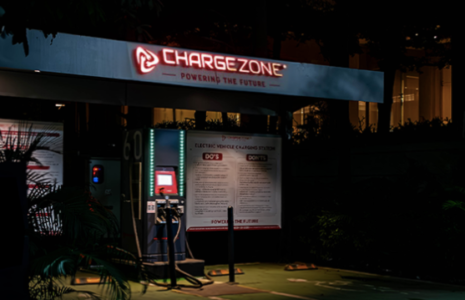
The ChargeZone DOCO (Dealer Owned, Company Operated) franchise is India’s largest EV charging infrastructure investment opportunity — backed by India’s largest EV charging network (15,000+ charging points at 1,200+ locations), an SBI financing partnership for loans up to ₹10 crore, and government alignment under the PM E-Drive programme (₹2,000 crore allocated). ChargeZone announced in March 2026 a target of 1,000+ highway supercharging stations by FY2027 — the largest franchise-based EV charging expansion in India to date. Below is everything you need to evaluate and apply: all four investment models, complete cost breakdowns, revenue estimates by utilisation rate, SBI financing details, eligibility criteria, and the step-by-step application process.
Want an honest review including the DOCO model explained, the utilisation rate reality, the hidden transformer cost, and who should not invest? Read our ChargeZone franchise honest review →
⚠️ Important — DOCO Is Not a Traditional Franchise
ChargeZone operates a DOCO — Dealer Owned, Company Operated model:
- You own the charging station infrastructure — hardware, civil work, and electrical connection
- ChargeZone operates everything — technology, maintenance, customer app, payment collection, and uptime management
- You earn a revenue share from every kWh dispensed at your station
- No daily involvement required — genuinely passive once commissioned
- Your return depends entirely on the utilisation rate — location is the single most critical variable
This is infrastructure ownership — not business operation.
Partnership at a Glance
Company | ChargeZone (Charge Zone Technology Solutions Pvt. Ltd.) |
Founder | Kartikey Hariyani |
Establishment Year | 2018 |
Headquartered | Ahmedabad, Gujarat |
Network | 15,000+ charging points at 1,200+ locations across India and the UAE |
Market position | India’s largest EV charging network by charging points |
OEM partnerships | Tata.ev, Hyundai, BMW, Mercedes-Benz, Audi, Volvo, VinFast, Toyota, Maruti Suzuki |
Government alignment | PM E-Drive programme — ₹2,000 crore government allocation for EV charging infrastructure |
Financing partner | State Bank of India — EV Mitra scheme (MoU signed August 2025) |
SBI loan range | ₹10 lakh–₹10 crore; repayment up to 7 years; CGTMSE backing available |
Partner model | DOCO — Dealer Owned, Company Operated |
Investment range | ₹20 lakhs–₹1 crore+ (model and location dependent) |
Revenue model | Revenue share on kWh dispensed — % confirmed in DOCO agreement |
Space required | Minimum 550 sq ft (basic setup); 2,000–5,000 sq ft (highway supercharging station) |
Daily partner involvement | Minimal — ChargeZone manages all operations |
Break-even period | 2.5–8 years (utilisation rate and investment level dependent) |
Highway expansion target | 1,000+ DOCO supercharging stations by March 2027 |
Highway corridors covered | Delhi–Mumbai, Bengaluru–Hyderabad, Mumbai–Hyderabad, Delhi–Chandigarh, Bengaluru–Chennai, Vizag–Chennai, Mumbai–Bengaluru |
Application | chargezone.co.in/franchise |
All Four ChargeZone Franchise Investment Models — Compared
Model | Space | Charger Configuration | Investment | Best For |
|---|---|---|---|---|
Basic Fast Charging Setup | 550–1,000 sq ft | 2 AC chargers (7–22 kW) + 1 DC fast charger (30–60 kW) | ₹20–35 lakhs | Urban commercial properties, fuel station add-ons, apartment complexes with moderate EV counts — entry-level model |
Standard Commercial Station | 1,000–2,000 sq ft | 2–4 DC fast chargers (60–120 kW) | ₹35–60 lakhs | Malls, IT parks, commercial hubs, highway-adjacent fuel stations — primary urban commercial model |
Highway Supercharging Station | 2,000–5,000 sq ft | 4–8 DC fast chargers (120–180 kW) + canopy + amenities | ₹60 lakhs–₹1 crore | National highway corridors — the primary target of ChargeZone’s 1,000-station FY2027 expansion; highest utilisation potential |
Fleet Charging Depot | 3,000–8,000 sq ft | 8–20 AC + DC chargers (mixed configuration for overnight and fast charging) | ₹80 lakhs–₹3 crores | Fleet operators (taxi aggregators, logistics companies, delivery fleets); purpose-built for commercial EV fleets with overnight and rapid-turnaround charging needs |
Complete Cost Breakdown — Standard Commercial Station (Most Common Model)
Cost Head | Estimated Amount |
|---|---|
DC fast charger hardware (60–120 kW × 2–4 guns) | ₹12–28 lakhs |
AC charger hardware (7–22 kW × 2–4 units) | ₹2–5 lakhs |
Civil work — charging bay construction, flooring, canopy, parking markings | ₹3–8 lakhs |
Electrical infrastructure — high-voltage wiring, distribution panels, earthing | ₹3–6 lakhs |
Transformer upgrade (if required by location’s grid capacity) | ₹5–20 lakhs |
Grid connection charges (DISCOM application and connection fees) | ₹1–4 lakhs |
ChargeZone technology integration — network controller, communication hardware, app onboarding | ₹1–2 lakhs |
Signage and branding — ChargeZone brand standards | ₹50,000–₹1.5 lakhs |
Licensing — BEE registration, DISCOM approvals, local municipal clearances, fire safety | ₹50,000–₹1.5 lakhs |
Working capital reserve — 3 months operating costs during ramp-up | ₹2–4 lakhs |
Total Estimated Investment (without transformer) | ₹25–59.5 lakhs |
Total Estimated Investment (with transformer upgrade) | ₹30–79.5 lakhs |
Land and property costs are separate and borne by the partner — investors who own the property eliminate this variable entirely. Transformer requirement depends on your location’s existing grid capacity and must be assessed during site evaluation. Figures are indicative as of May 2026 — verify current hardware and civil costs with ChargeZone’s project team.
Cost Breakdown Across All Four Models
Cost Head | Basic Setup | Standard Station | Highway Supercharger | Fleet Depot |
|---|---|---|---|---|
Charger hardware | ₹8–14 lakhs | ₹14–33 lakhs | ₹30–65 lakhs | ₹40–1.2 crores |
Civil work | ₹1–3 lakhs | ₹3–8 lakhs | ₹8–20 lakhs | ₹15–40 lakhs |
Electrical + transformer | ₹3–8 lakhs | ₹8–26 lakhs | ₹15–35 lakhs | ₹25–60 lakhs |
Technology + licensing | ₹1–2 lakhs | ₹2–4 lakhs | ₹3–6 lakhs | ₹5–10 lakhs |
Working capital | ₹1–2 lakhs | ₹2–4 lakhs | ₹3–5 lakhs | ₹5–10 lakhs |
Total range | ₹14–29 lakhs | ₹29–75 lakhs | ₹59–1.31 crores | ₹90 lakhs–₹2.4 crores |
SBI EV Mitra Financing — Key Details
Parameter | Details |
|---|---|
Scheme name | SBI EV Mitra Scheme |
MoU signed | August 2025 — ChargeZone and State Bank of India |
Loan range | ₹10 lakh minimum to ₹10 crore maximum |
Repayment period | Up to 7 years |
Collateral support | CGTMSE (Credit Guarantee Fund Trust for Micro and Small Enterprises) backing available — reduces collateral requirement for eligible borrowers |
Eligible borrowers | Individuals, entrepreneurs, businesses, and institutions investing in ChargeZone DOCO stations |
Effective equity requirement | Typically 25–40% of total investment (balance funded by SBI loan) — significantly reduces upfront equity deployment |
How to apply | Apply through ChargeZone’s franchise team — they coordinate the SBI financing process as part of the DOCO onboarding |
Important note | Always model debt service (monthly EMI) against conservative utilisation (8%) before committing — ensure the station is cash-flow positive after debt service at minimum utilisation |
Revenue and Profit Estimates by Utilisation Rate
Based on a Standard Commercial Station with 2 × 60 kW DC fast chargers; charging rate ₹20/kWh; ChargeZone revenue share assumed at 60% to partner (verify in your agreement)
Utilisation Rate | Daily Revenue (2 guns) | Monthly Gross Revenue | Partner Share (60%) | Less Electricity Cost | Net Monthly Income |
|---|---|---|---|---|---|
8% (national avg) | ₹4,608 | ₹1,38,240 | ₹82,944 | ₹46,080 | ₹36,864 |
12% | ₹6,912 | ₹2,07,360 | ₹1,24,416 | ₹69,120 | ₹55,296 |
20% | ₹11,520 | ₹3,45,600 | ₹2,07,360 | ₹1,15,200 | ₹92,160 |
25% | ₹14,400 | ₹4,32,000 | ₹2,59,200 | ₹1,44,000 | ₹1,15,200 |
35% | ₹20,160 | ₹6,04,800 | ₹3,62,880 | ₹2,01,600 | ₹1,61,280 |
Electricity cost calculated at ₹10/kWh commercial rate. Revenue share percentage is illustrative — confirm exact % in your DOCO agreement. Add 2–4 additional guns to proportionally scale these figures. Maintenance, licensing, and misc costs of ₹10,000–₹25,000/month should be deducted from net income figures above.
Break-Even Analysis by Investment and Utilisation
Investment | At 8% Utilisation | At 15% Utilisation | At 25% Utilisation | At 35% Utilisation |
|---|---|---|---|---|
₹25 lakhs (Basic) | 7–9 years | 4–5 years | 2.5–3 years | 2–2.5 years |
₹45 lakhs (Standard) | 10–12 years | 5–7 years | 3.5–4.5 years | 2.5–3 years |
₹75 lakhs (Highway) | 12–15 years | 6–8 years | 4–5 years | 3–3.5 years |
₹1.5 crores (Highway + transformer) | Not viable | 8–10 years | 5–6 years | 3.5–4.5 years |
Key insight from this table: At India’s current national average utilisation of 8%, most EV charging investments have break-even timelines of 7–12+ years — which is only viable if you believe utilisation will increase significantly during the asset life. At highway corridor utilisation of 25–35%, break-even is 2.5–4 years — a genuinely attractive return. Location selection is therefore not just important — it is the entire investment thesis.
City and Location Type — Revenue Potential Guide
Location Type | Expected Utilisation | Annual Net Income (2-gun standard station) | ChargeZone Priority? |
|---|---|---|---|
National highway corridor (Delhi–Mumbai, Bengaluru–Hyderabad etc.) | 25–40% | ₹13–19 lakhs | ✅ Highest priority — 1,000-station expansion target |
Highway dhaba / fuel station on NH | 20–35% | ₹11–16 lakhs | ✅ High priority |
Premium mall — Tier-1 city | 15–25% | ₹6.6–11 lakhs | ✅ Active expansion |
IT park / corporate campus | 15–22% | ₹6.6–9.7 lakhs | ✅ Active expansion |
Fuel station — Tier-1 urban | 10–18% | ₹4.4–7.9 lakhs | ⚠️ Moderate priority |
Gated community / apartment complex | 8–12% | ₹3.5–5.3 lakhs | ⚠️ Lower priority for ChargeZone DC fast |
Generic urban commercial | 5–10% | ₹2.2–4.4 lakhs | ❌ Not recommended |
Tier-3 towns | 2–6% | ₹0.9–2.6 lakhs | ❌ Premature for current EV adoption |
Ongoing Monthly Operating Costs
Cost Head | Basic Setup | Standard Station | Highway Supercharger |
|---|---|---|---|
Electricity (commercial DISCOM rate — usage variable) | ₹15,000–₹40,000 | ₹40,000–₹1,20,000 | ₹1,00,000–₹3,00,000 |
Property rent (if leased) | ₹5,000–₹25,000 | ₹15,000–₹60,000 | ₹30,000–₹1,50,000 |
ChargeZone annual maintenance charge (proportional monthly) | ₹3,000–₹6,000 | ₹6,000–₹12,000 | ₹12,000–₹25,000 |
Internet connectivity (charger network communication) | ₹1,000–₹2,000 | ₹1,500–₹3,000 | ₹2,000–₹5,000 |
Insurance (infrastructure and liability) | ₹1,500–₹3,000 | ₹2,500–₹5,000 | ₹5,000–₹12,000 |
Misc (cleaning, minor repairs, consumables) | ₹1,000–₹2,000 | ₹2,000–₹4,000 | ₹4,000–₹8,000 |
Total Monthly Operating Costs | ₹26,500–₹78,000 | ₹67,000–₹2,04,000 | ₹1,53,000–₹5,00,000 |
Eligibility Criteria
- Location requirement: Suitable property on a national highway corridor, inside a premium commercial hub, or at a high-footfall commercial destination — ground level with adequate space for parking EVs during charging and delivery vehicle access for maintenance
- Investment capacity: ₹20 lakhs minimum equity plus SBI financing eligibility for the balance; total project cost ₹25 lakhs–₹1.5 crores depending on model
- Electrical infrastructure: Existing 3-phase commercial connection of adequate capacity OR willingness to fund transformer upgrade — ChargeZone conducts site evaluation to determine electrical requirements
- Space: Minimum 550 sq ft (basic model); 1,000–2,000 sq ft (standard commercial); 2,000–5,000 sq ft (highway supercharger)
- Property status: Owned or long-lease property — minimum 10-year lease stability recommended to justify infrastructure investment
- Business registration: Registered proprietorship, partnership, LLP, or private limited company for formal DOCO agreement
- Investor types eligible: Landowners, entrepreneurs, fuel station operators, hotel and dhaba owners, fleet operators, businesses, institutions — any entity with suitable property and investment capacity
- Geographic availability: Pan India — active priority expansion in national highway corridors and Tier-1 commercial hubs
Support Provided by ChargeZone
- Site evaluation: ChargeZone’s technical team evaluates your proposed location for EV traffic potential, electrical infrastructure adequacy, space suitability, and grid connection requirements before any investment commitment
- Project management: End-to-end commissioning — ChargeZone manages charger procurement, civil contractor coordination, electrical installation, DISCOM connection, and BEE registration
- Technology platform: ChargeZone’s app and network management software handles all customer-facing operations — EV driver discovery, charging session management, payment collection, and session reporting
- 24/7 operations management: ChargeZone’s operations centre monitors all stations for uptime, fault detection, and remote diagnostics — partners are not required to manage day-to-day operational issues
- Maintenance and service: Scheduled preventive maintenance and on-demand repair by ChargeZone’s technical field team; hardware replacements managed by ChargeZone
- Revenue settlement: Regular revenue settlement to partner’s bank account — typically monthly or fortnightly; transparent dashboard showing session counts, kWh dispensed, and earnings
- OEM integration: Your station is integrated into the navigation and charging networks of all ChargeZone’s OEM partners (Tata, Hyundai, BMW, Mercedes etc.) — increasing discoverability to EV owners of these brands
- SBI financing coordination: ChargeZone’s partner team assists with the SBI EV Mitra loan application process as part of the DOCO onboarding
- Regulatory support: Guidance on BEE registration, DISCOM approvals, and local municipal licensing required for EV charging station operation
Pros and Cons
Strengths
- India’s largest EV charging network — 15,000+ points, strongest brand in EV charging infrastructure
- Genuinely passive income model — ChargeZone manages all operations; no daily involvement from partner
- SBI EV Mitra financing — loans up to ₹10 crore with CGTMSE backing; reduces equity requirement significantly
- Government alignment — PM E-Drive programme; ₹2,000 crore allocation; policy tailwind is strong and durable
- OEM partnerships — station discoverable to owners of Tata, Hyundai, BMW, Mercedes, Audi, Volvo, Toyota, Maruti EVs
- Structural market growth — India needs 1 million+ charging points by 2030 vs ~26,000 today; infrastructure gap is enormous
- Asset ownership — unlike Blinkit or Subway, you own a tangible, depreciable physical asset with potential resale value
- Long investment horizon compounds well — utilisation will increase as EV fleet grows; early-built stations in right locations benefit from this compounding
Risks
- Utilisation rate is entirely location-dependent — India’s national average of 8–12% produces very thin returns; only high-traffic locations generate meaningful income
- Transformer upgrade cost (₹5–20 lakhs) is frequently hidden from headline investment figures — verify specifically for your location
- Revenue share percentage not publicly standardised — confirm exact % in your DOCO agreement before investment
- Technology obsolescence risk — today’s 60–120 kW chargers may require costly upgrades as EV battery technology evolves toward ultra-fast charging
- Electricity price volatility — commercial tariff increases directly reduce your margin per kWh dispensed
- Long break-even at low utilisation — 7–12 years at 8% utilisation requires genuine long-term investment conviction
- DISCOM and grid approval delays — electrical connection and regulatory clearances can delay commissioning by 3–6 months in some states
- ChargeZone operational control — as DOCO partner, you have no direct control over pricing, customer app, or operational decisions that affect your revenue
How to Apply — Step by Step
- Assess your location’s EV traffic potential — check existing EV charging demand in your area using the ChargeZone app, Tata Power app, and PlugShare; note how many EVs regularly pass through or park at your proposed location
- Visit the official ChargeZone franchise page at chargezone.co.in/franchise and complete the partner enquiry form with your location details, property type, available space, and investment capacity
- Initial discussion with ChargeZone partner team — ChargeZone contacts you to discuss your location, investment capacity, and suitable partnership model
- Site technical evaluation — ChargeZone’s technical team visits your premises to assess electrical capacity, grid connection requirements, space adequacy, EV traffic potential, and transformer requirement
- Proposal and financial model — ChargeZone presents a detailed investment proposal including total project cost, revenue share terms, utilisation projections for your location, and SBI financing options
- SBI EV Mitra loan application (if using financing) — ChargeZone’s team assists with the SBI loan application under the EV Mitra scheme; submit financial documents to nearest SBI branch with ChargeZone’s referral
- DOCO agreement review and signing — review all terms carefully: revenue share percentage, maintenance responsibilities, technology upgrade obligations, agreement term, and exit conditions; have an independent lawyer review before signing
- Project commissioning — ChargeZone manages charger procurement, civil work, electrical installation, DISCOM connection, and BEE registration (typically 60–120 days depending on state and grid complexity)
- Regulatory approvals — BEE registration, DISCOM connection approval, local fire safety and municipal clearances; ChargeZone provides guidance and documentation support
- Go live — ChargeZone activates your station on its network and all OEM partner apps; revenue starts flowing from first session
Official ChargeZone Franchise Contact:
Website: chargezone.co.in/franchise
Corporate Address: ChargeZone (Charge Zone Technology Solutions Pvt. Ltd.), Ahmedabad, Gujarat
Documents Required
- Identity proof — Aadhaar card and PAN card (individual) or Certificate of Incorporation (company/LLP)
- Address proof
- Property documents — sale deed, lease deed, or rent agreement for proposed charging station location; property tax receipt
- Electrical connection documents — existing DISCOM connection details, sanctioned load capacity
- Bank statements (last 6–12 months) demonstrating investment capacity
- ITR filings (last 2 years)
- GST registration (existing or applied for)
- For SBI EV Mitra loan: additional documents per SBI’s MSME loan requirements
- BEE registration (obtained during commissioning process)
- DISCOM approval for EV charging installation (obtained during commissioning)
- Local municipal NOC and fire safety clearance (obtained during commissioning)
- Signed DOCO agreement with Charge Zone Technology Solutions Pvt. Ltd.
Frequently Asked Questions
What is the minimum investment for a ChargeZone franchise?
ChargeZone’s official franchise page states investment starts from ₹20 lakhs. A basic fast charging setup (2 AC + 1 DC charger) ranges from ₹20–35 lakhs excluding transformer upgrades. A standard commercial station (2–4 DC fast chargers) ranges from ₹35–75 lakhs including transformer where needed. Highway supercharging stations require ₹60 lakhs–₹1.5 crores. Property and land costs are additional. SBI EV Mitra financing is available to reduce equity requirement.
How does ChargeZone pay DOCO partners?
ChargeZone pays partners a revenue share — a percentage of the total charging revenue collected from EV drivers at your station. The exact revenue share percentage is determined in your specific DOCO agreement and is not publicly standardised. Revenue settlements are typically made monthly or fortnightly directly to the partner’s bank account. A real-time dashboard gives partners visibility into sessions, kWh dispensed, and earnings at all times.
What is the SBI EV Mitra scheme?
SBI’s EV Mitra scheme — under an MoU signed with ChargeZone in August 2025 — provides financing for investors setting up ChargeZone DOCO charging stations. Loans range from ₹10 lakh to ₹10 crore with repayment periods up to 7 years and CGTMSE backing for eligible borrowers. This significantly reduces the equity requirement — typically to 25–40% of total project cost. Apply through ChargeZone’s partner team who coordinate the SBI process as part of DOCO onboarding.
What space is needed for a ChargeZone charging station?
Minimum 550 sq ft for a basic fast charging setup. Standard commercial stations require 1,000–2,000 sq ft. Highway supercharging stations require 2,000–5,000 sq ft including EV parking bays, covered charging area, and approach road. The property must be ground level with easy access for both EVs and maintenance vehicles, and must have adequate electrical infrastructure or capacity for upgrade.
Does ChargeZone handle maintenance?
Yes — this is a core feature of the DOCO model. ChargeZone manages all maintenance including scheduled preventive maintenance, on-demand fault repair, remote diagnostics, and hardware replacement under their operations framework. Partners are not responsible for the technical operation of the chargers. This makes the ChargeZone DOCO model genuinely more passive than any franchise model covered in this directory.
Which locations does ChargeZone prioritise for new franchise partners?
ChargeZone’s FY2027 expansion priority is national highway corridors — specifically Delhi–Mumbai, Bengaluru–Hyderabad, Mumbai–Hyderabad, Delhi–Chandigarh, Bengaluru–Chennai, Vizag–Chennai, and Mumbai–Bengaluru. Beyond highways, premium malls and IT parks in Tier-1 cities are the secondary priority. Partners with properties on these corridors or in these commercial anchor locations are most likely to receive fast-track approval and highest utilisation projections.
Disclaimer: Investment figures, utilisation rates, revenue estimates, and break-even projections are indicative, based on publicly available data including ChargeZone’s official franchise portal, electrive.com, Autocar Professional, and multiple published sources as of May 2026. Revenue share percentage, SBI loan terms, and specific project costs vary by location, model, and ChargeZone’s current DOCO agreement. Verify all current terms directly with ChargeZone’s official franchise team and SBI before making any financial commitment. NextWhatBusiness does not receive commission from this listing.