
Send Enquiry
The Chai Sutta Bar franchise is one of India’s fastest-growing youth-oriented tea cafe opportunities — built without outside capital from a ₹30,000 Indore startup to a ₹150 crore brand with 600+ outlets across 320+ cities in just nine years. Below is everything you need to evaluate and apply: all outlet formats, complete cost tables, realistic profit figures, eligibility, and the step-by-step application process.
Want an honest review of whether this franchise is right for you — including real profit numbers, hidden costs, and location risks? Read our Chai Sutta Bar franchise honest review →
Franchise at a Glance
Brand | Chai Sutta Bar (CSB) |
Founded | 2016 — Indore, Madhya Pradesh |
Founders | Anubhav Dubey and Anand Nayak (joined by Rahul Patidar) |
Brand turnover | ₹150 crore (2025) |
Network | 600+ outlets across 320+ cities in India; international outlets in Dubai and Oman |
Investment range | ₹16–25 lakhs (format and location dependent) |
Royalty | 4% of net monthly sales + 2% marketing contribution |
Space required | 300–2,000 sq ft, depending on format |
Net profit margin | ~22% (well-located outlet) |
Break-even period | 12–18 months |
Franchise model | FOFO (Franchise Owned Franchise Operated) — 5-year agreement |
Geographic availability | Pan India |
Setup timeline | 45–60 days from agreement signing to launch |
Application | Online via chaisuttabarindia.com |
Outlet Formats — All Three Compared
Format | Space | Investment | Seating | Best Location |
|---|---|---|---|---|
Chai Sutta Kiosk | 300–400 sq ft | ₹16–18 lakhs | Minimal / counter service | Malls, transit hubs, high-footfall corridors — impulse-purchase model |
Chai Sutta Medium Stall | 400–500 sq ft | ₹18–22 lakhs | Moderate seating | Near colleges, markets, commercial streets — beverage + snack model |
Chai Sutta Full Café | 500–2,000 sq ft | ₹22–25 lakhs | Full dine-in seating | College areas, youth hubs, hangout destinations — complete cafe experience |
Complete Cost Breakdown — Kiosk Format
Cost Head | Estimated Amount |
|---|---|
Franchise fee (non-refundable) | ₹3–5 lakhs |
Interior setup, furniture, and fit-out | ₹4–6 lakhs |
Kitchen equipment (tea machine, boiler, refrigerator, grinder) | ₹3–4 lakhs |
Signage and branding materials | ₹50,000–₹1 lakh |
Opening inventory (tea, milk, raw materials, kulhads) | ₹50,000–₹1 lakh |
FSSAI licence, GST registration, trade licence | ₹30,000–₹50,000 |
Working capital (2–3 months) | ₹1–2 lakhs |
Total Estimated Investment | ₹13–19 lakhs |
Complete Cost Breakdown — Full Café Format
Cost Head | Estimated Amount |
|---|---|
Franchise fee (non-refundable) | ₹6–8 lakhs |
Interior design, seating, ambiance fit-out | ₹5–7 lakhs |
Kitchen equipment and appliances | ₹4–6 lakhs |
Security deposit (refundable) | ₹2–3 lakhs |
Signage, branding, launch marketing | ₹1–3 lakhs |
Opening inventory and initial stock | ₹1–1.5 lakhs |
Licensing and permits | ₹50,000–₹1 lakh |
Working capital (3 months) | ₹2–3 lakhs |
Total Estimated Investment | ₹21–32 lakhs |
Property and rental costs are not included. Figures are indicative. Verify current costs with CSB’s franchise team before committing.
Ongoing Monthly Operating Costs
Cost Head | Kiosk | Medium Stall | Full Café |
|---|---|---|---|
Rent (location dependent) | ₹15,000–₹30,000 | ₹20,000–₹40,000 | ₹30,000–₹70,000 |
Raw materials (tea, milk, ingredients ~40–45% of sales) | Volume-linked | Volume-linked | Volume-linked |
Royalty (4% of net sales) | ₹8,000–₹16,000 | ₹12,000–₹22,000 | ₹16,000–₹32,000 |
Marketing fee (2% of gross sales) | ₹4,000–₹8,000 | ₹6,000–₹11,000 | ₹8,000–₹16,000 |
Staff salaries (2–4 people) | ₹16,000–₹24,000 | ₹20,000–₹35,000 | ₹30,000–₹55,000 |
Electricity and utilities | ₹5,000–₹8,000 | ₹6,000–₹10,000 | ₹8,000–₹15,000 |
Packaging (kulhads, cups, bags) | ₹6,000–₹10,000 | ₹8,000–₹15,000 | ₹12,000–₹20,000 |
Profit Margins by Product Category
Product Category | Gross Margin on Product | Examples |
|---|---|---|
Kulhad chai (core beverages) | 40–50% (product-level gross) | Adrak chai, masala chai, kesar chai, tulsi chai, elaichi chai, chocolate chai at ₹10–₹50/cup |
Coffee beverages | 35–45% | Cappuccino, cold coffee, flavoured lattes |
Mojitos and coolers | 45–55% | Green apple, watermelon, lemon mint mojitos |
Snacks and food items | 55–65% | Sandwiches, burgers, noodles, pasta — highest margin category |
Packaged products | 15–25% | Branded tea blends, masalas, and packaged snacks |
Note: These are product-level gross margins before operational costs. Net outlet profit margin (after all expenses) is approximately 18–25% of monthly turnover for a well-run, well-located outlet.
Revenue and Profit Estimates by Format
Format | Monthly Sales Turnover | Net Monthly Profit | Break-even Period |
|---|---|---|---|
Kiosk (good location) | ₹2.5–4 lakhs | ₹30,000–₹70,000 | 12–16 months |
Medium Stall (good location) | ₹4–6 lakhs | ₹60,000–₹1.1 lakhs | 14–18 months |
Full Café (good location) | ₹6–10 lakhs | ₹1–2 lakhs | 16–24 months |
City-Wise Investment Estimates
City / Region | Kiosk Total Cost | Full Café Total Cost |
|---|---|---|
Delhi / NCR / Mumbai | ₹18–22 lakhs | ₹27–35 lakhs |
Bangalore / Hyderabad / Pune | ₹17–21 lakhs | ₹25–32 lakhs |
Indore / Bhopal / Jaipur / Nagpur | ₹15–18 lakhs | ₹22–28 lakhs |
Lucknow / Chandigarh / Surat | ₹15–19 lakhs | ₹22–29 lakhs |
Tier-2 cities (Ranchi, Patna, Agra, Vadodara) | ₹14–17 lakhs | ₹20–26 lakhs |
Tier-3 cities and smaller towns | ₹13–16 lakhs | ₹18–24 lakhs |
Eligibility Criteria
- Age: Minimum 21 years
- Prior experience: No F&B experience required — CSB provides full operational training. Business acumen and customer service orientation preferred
- Space: 300–2,000 sq ft depending on format — owned or leased commercial ground-floor space
- Location: High-footfall area with significant youth or student population — near colleges, universities, hostels, markets, or transit hubs
- Investment capacity: ₹16–25 lakhs liquid capital depending on format; working capital is additional
- Staff commitment: 2–4 staff members required; CSB recommends owner presence especially in the first year
Support Provided by Chai Sutta Bar
- Location selection guidance: CSB’s franchise team helps identify and evaluate shortlisted locations before commitment
- Store design and setup: Complete interior design standards, layout planning, branding specification, and fit-out support
- Raw material supply chain: Core materials (branded tea blends, specific ingredients) supplied through CSB’s supply network to ensure consistency
- Staff training: Comprehensive training program covering tea preparation, outlet management, customer service, and hygiene standards
- Marketing support: National marketing campaigns, social media content, launch promotional materials — funded by the 2% marketing contribution
- Technology: POS systems and operational software provided for inventory and billing management
- Ongoing field support: Regular visits from CSB’s franchise operations team to maintain quality standards
- Kulhad sourcing: Eco-friendly kulhads sourced centrally from potter communities — franchisees benefit from bulk pricing and consistent supply
How to Apply — Step by Step
- Visit the official website at chaisuttabarindia.com and go to the Franchise section
- Fill the franchise enquiry form with your name, contact details, city, proposed location details, available space, and investment budget
- Submit photos and details of your proposed location — CSB evaluates footfall potential, accessibility, and demographic fit
- Shortlisting and outreach — CSB’s franchise team contacts shortlisted applicants for a detailed discussion
- Location inspection — CSB’s team visits your proposed site to assess suitability
- Agreement signing — finalise the FOFO franchise agreement (5-year term); pay the non-refundable franchise fee
- Store setup — CSB provides fit-out specifications, equipment list, and branding materials; setup typically takes 45–60 days
- Staff training — mandatory pre-launch training for you and your team conducted by CSB
- Grand opening — CSB supports your launch with marketing materials and operational guidance
Official Chai Sutta Bar Franchise Contact:
Website: chaisuttabarindia.com
Headquarters: Indore, Madhya Pradesh
Documents Required
- Identity proof — Aadhaar card and PAN card
- Address proof
- Passport-size photographs
- Property documents — lease agreement or sale deed for the proposed outlet space
- NOC from property owner (if rented)
- Bank account details and cancelled cheque
- Bank statement demonstrating investment capacity
- FSSAI food licence (obtained after approval)
- GST registration (obtained after approval)
- Shop & Establishment Act registration (post-approval)
- Trade licence from local municipal authority
Pros and Cons
Strengths
- One of India’s most recognised youth tea cafe brands — instant credibility with the core 18–28 demographic
- Built to ₹150 crore without outside capital — proven organic, self-sustaining business model
- Strong kulhad-chai USP with sustainability and cultural identity narrative — differentiates from generic cafes
- Wide product menu (chai, coffee, mojitos, snacks, food) raises average bill value significantly
- Pan-India availability with established supply chain in all active markets
- End-to-end franchise support from location to launch — above average for F&B category at this price point
- India’s tea market expected to reach ₹21,500 crore by 2027 — strong sectoral tailwinds
- International presence (Dubai, Oman) signals brand durability beyond domestic markets
Risks
- Youth-only demographic — works poorly in non-youth locations regardless of brand strength
- Ongoing royalty (4%) + marketing fee (2%) = 6% of revenue every month for the franchise term
- Market saturation in Tier-1 cities — multiple CSB outlets competing in the same catchment
- Raw material sourcing tied to CSB’s supply chain — limited flexibility for local cost optimisation
- Active daily management required — not suitable for passive investors
- Local kulhad chai cafes replicating the aesthetic without franchise cost create price competition in some markets
Frequently Asked Questions
What is the total investment for a Chai Sutta Bar franchise?
Total investment ranges from ₹13–19 lakhs for a Kiosk format to ₹21–32 lakhs for a Full Café, including the franchise fee, interior fit-out, equipment, opening inventory, licences, and working capital. Rent and property costs are additional and vary significantly by city and location.
Does Chai Sutta Bar charge royalty?
Yes. CSB charges a royalty fee of 4% of net monthly sales plus a marketing contribution of approximately 2% of gross monthly revenue. On a ₹5 lakh/month outlet, the combined fee is approximately ₹30,000/month. This is built into the franchise model as an ongoing charge throughout the 5-year agreement period.
What is the profit margin of a Chai Sutta Bar franchise?
Product-level gross margins on beverages are 40–50% and on food items up to 65%. After all operational expenses (raw materials, royalty, marketing fee, rent, staff, utilities, packaging), net outlet profit margin is approximately 18–25% of monthly turnover for a well-located, well-run outlet. Monthly net profit ranges from ₹30,000–₹70,000 for a Kiosk to ₹1–2 lakhs for a Full Café in a good location.
How long does it take to break even?
Break-even typically occurs in 12–18 months for a well-located outlet. CSB reports an average payback period of approximately 1.3 years (around 15–16 months). Locations near colleges and high youth-footfall areas with active food item sales tend to break even faster; lower-footfall locations take longer.
Is the Chai Sutta Bar franchise available across all of India?
Yes — CSB offers franchise opportunities pan-India. With 600+ outlets already in 320+ cities, some markets in Tier-1 cities are approaching saturation. Tier-2 and Tier-3 cities currently represent the best opportunity for new franchisees in terms of lower rent, lower competition density, and available youth-heavy locations.
What is the minimum area required for a Chai Sutta Bar franchise?
Minimum 300 sq ft for the Kiosk format. Medium Stall requires 400–500 sq ft. A Full Café requires 500 sq ft or more, with the standard range being 500–2,000 sq ft. All formats require ground-floor commercial space in a high-footfall location.
Is Chai Sutta Bar a no-smoking zone?
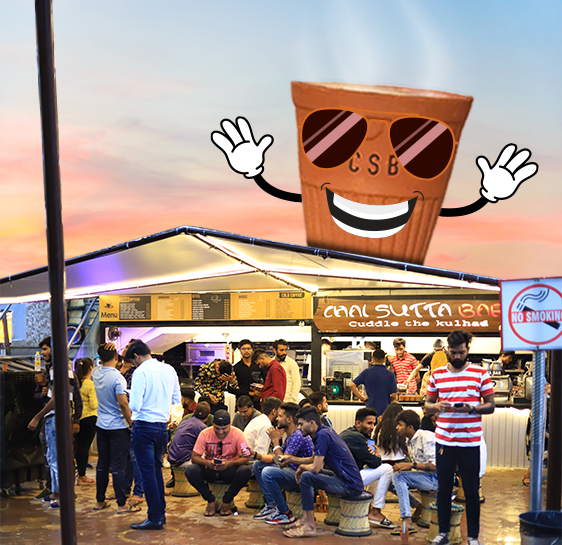
Yes. Despite the name, Chai Sutta Bar is a strict no-smoking establishment. The “sutta” in the name is a cultural reference to the college break culture — the idea being that chai replaces the cigarette break for the younger generation. No alcohol or cigarettes are served or permitted at any CSB outlet.
Disclaimer: Investment figures and profit estimates are indicative, based on publicly available data and Chai Sutta Bar’s official franchise documentation as of April 2026. Actual figures may vary depending on location, outlet format, operational efficiency, and market conditions. Verify all current terms directly with CSB’s official franchise team before making any financial commitment. NextWhatBusiness does not receive commission from this listing.